You’ve probably heard it a hundred times SEO is crucial if you want people to find your website. But how exactly does it work? And more importantly, where should you even begin?
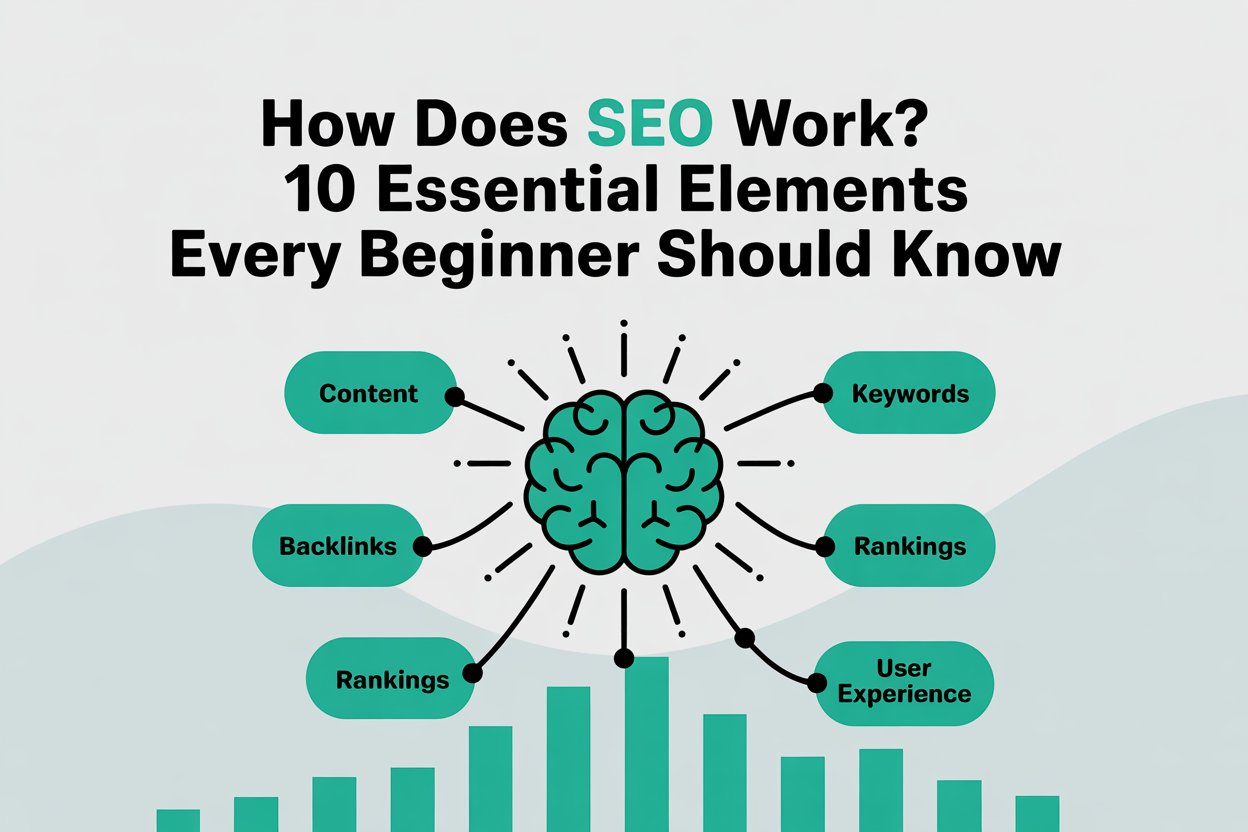
If you’re just stepping into the SEO world, don’t stress. It’s not some mysterious tech sorcery it’s just about making your website more visible and valuable to both users and search engines like Google. In this post, we’ll break it down for you in plain English. No jargon. No fluff. Just 10 core elements that form the foundation of SEO in 2025 and beyond. so, let’s start how does SEO work?
Table of Contents
1. Keywords: What Are People Searching For?
Keywords are at the heart of SEO. They’re the words and phrases people type into Google when looking for something. Think of them as the bridge between what your audience wants and what your website offers.
- Use keyword research tools like Google Keyword Planner, Ubersuggest, or Ahrefs to find what your audience is actually searching for.
- Focus on long-tail keywords (like “best vegan protein powder for muscle gain”) they’re less competitive and more targeted.
✅ Pro tip: Don’t stuff keywords. Use them naturally in your content, especially in titles, meta descriptions, and headings.
2. Quality Content: Be the Best Answer
Good SEO starts with great content. Your blog, product pages, or service descriptions should do one simple thing: answer your visitor’s question better than anyone else.
Search engines are obsessed with relevance. They want to send users to pages that provide real value. That means:
- Clear, well-written, and original writing
- In-depth explanations or step-by-step guidance
- Visuals like images, infographics, or videos to enhance understanding
- Explore more insights on our SEO blog.
✅ Make sure your content satisfies the search intent whether it’s informational, navigational, or transactional.
3. On-Page SEO: Small Tweaks, Big Difference
This refers to the things you can control directly on your site to boost SEO. A few important ones:
- Title Tags – Keep them under 60 characters, include your main keyword, and make them clickable.
- Meta Descriptions – Think of this as your page’s elevator pitch. It should entice people to click.
- Header Tags (H1, H2, H3…) – Break your content into sections using headers. It helps both readers and search engines.
- Alt Text for Images – Helps Google understand what your images are about (and boosts image SEO).
- URL Structure – Short, readable URLs with your keyword are ideal (e.g.,
/how-seo-works/).
4. Technical SEO: The Engine Room
You don’t need to be a web developer to understand the basics. Technical SEO ensures your site is structured properly so Google can crawl and index it efficiently.
Key technical elements:
- Mobile-Friendly Design – Your site must look and work great on mobile devices.
- Fast Page Speed – No one waits for a slow site. Tools like PageSpeed Insights can help you identify bottlenecks.
- SSL Certificate (HTTPS) – A secure website is non-negotiable. Google even uses it as a ranking factor.
- Clean Site Architecture – Use clear menus, sitemaps, and internal linking to help search engines navigate your content.
5. Backlinks: Your Online Reputation
Think of backlinks as online votes of confidence. When other reputable sites link to yours, it signals to Google that your content is trustworthy.
But here’s the catch not all backlinks are created equal.
✅ Focus on quality over quantity.
- Links from authoritative, niche-relevant websites are gold.
- Avoid spammy link-building tactics or buying links that can get your site penalized.
- Always aim to earn white-hat backlinks from trustworthy sources.
At Link GrowthLab, we specialize in building clean, high-DA backlinks that Google actually rewards. If you need help, we’re always a message away.
6. User Experience (UX): Don’t Frustrate Visitors
SEO isn’t just about search engines. It’s about real people. If users have a bad experience on your site, they’ll bounce and Google notices.
Make sure your site is:
- Easy to navigate
- Visually appealing
- Clear on CTAs (Call-to-actions)
- Free of annoying popups or intrusive ads
✅ Great UX = longer time on site = better rankings.
7. Local SEO: Be Found in Your Area
If you’re a local business, this is a biggie.
- Set up and optimize your Google Business Profile
- Use local keywords like “best plumber in Brooklyn”
- Collect and manage customer reviews especially on Google
Local SEO helps your business show up in local search results, Google Maps, and “near me” queries.
8. Content Freshness: Keep It Updated
Search engines love fresh content. That doesn’t mean you need to post daily, but your existing content should be kept up to date.
- Refresh old blog posts with new stats or insights
- Add internal links to newer content
- Repurpose evergreen content in new formats (e.g., infographics, short videos)
✅ Make your website a living, breathing resource not a digital ghost town.
9. Analytics & Tracking: Know What’s Working
You can’t improve what you don’t measure. Set up tools like:
- Google Analytics – See where your traffic comes from and how users behave.
- Google Search Console – Track keyword performance, fix crawl errors, and monitor indexing.
- Rank tracking tools – Keep an eye on how your pages are performing in search results.
Check in regularly. Identify what’s working, what needs improving, and what content drives the most leads or sales.
10. Consistency & Patience: SEO Is a Long Game
This is the part most beginners overlook but it’s probably the most important mindset shift. you can check SEO beginner guide.
SEO is not a one-time fix. It’s a long-term strategy that rewards consistent effort over weeks and months, not overnight.
- Algorithms take time to recognize changes and improvements
- Backlinks and content efforts snowball over time
- Rankings fluctuate don’t panic, track trends
✅ Stick to your SEO plan, keep publishing valuable content, and build backlinks consistently.
Remember: The websites you see ranking on Page 1 didn’t get there by accident. They earned it over time through smart strategy and persistence.
Final Thoughts
SEO isn’t magic it’s methodical. When you focus on these 10 essential elements, you’ll be way ahead of most beginners who try to chase hacks or instant results.
By building a solid SEO foundation and staying consistent, you’re not just ranking higher you’re building a trustworthy, valuable brand online.