In today’s digital-first world, simply having a website isn’t enough. If your customers can’t find you online, you might as well be invisible. That’s where SEO Search Engine Optimization comes in.
Think of SEO as the digital version of placing your store right in the busiest part of town. It’s the process of making your website show up when people search for what you offer, bringing you qualified visitors and potential customers without paying for every click.
If you’re just starting to explore SEO, this guide will walk you through what it is, how it works, and why it’s one of the smartest investments you can make in your digital marketing strategy.
Table of Contents
1. What is SEO in Digital Marketing?
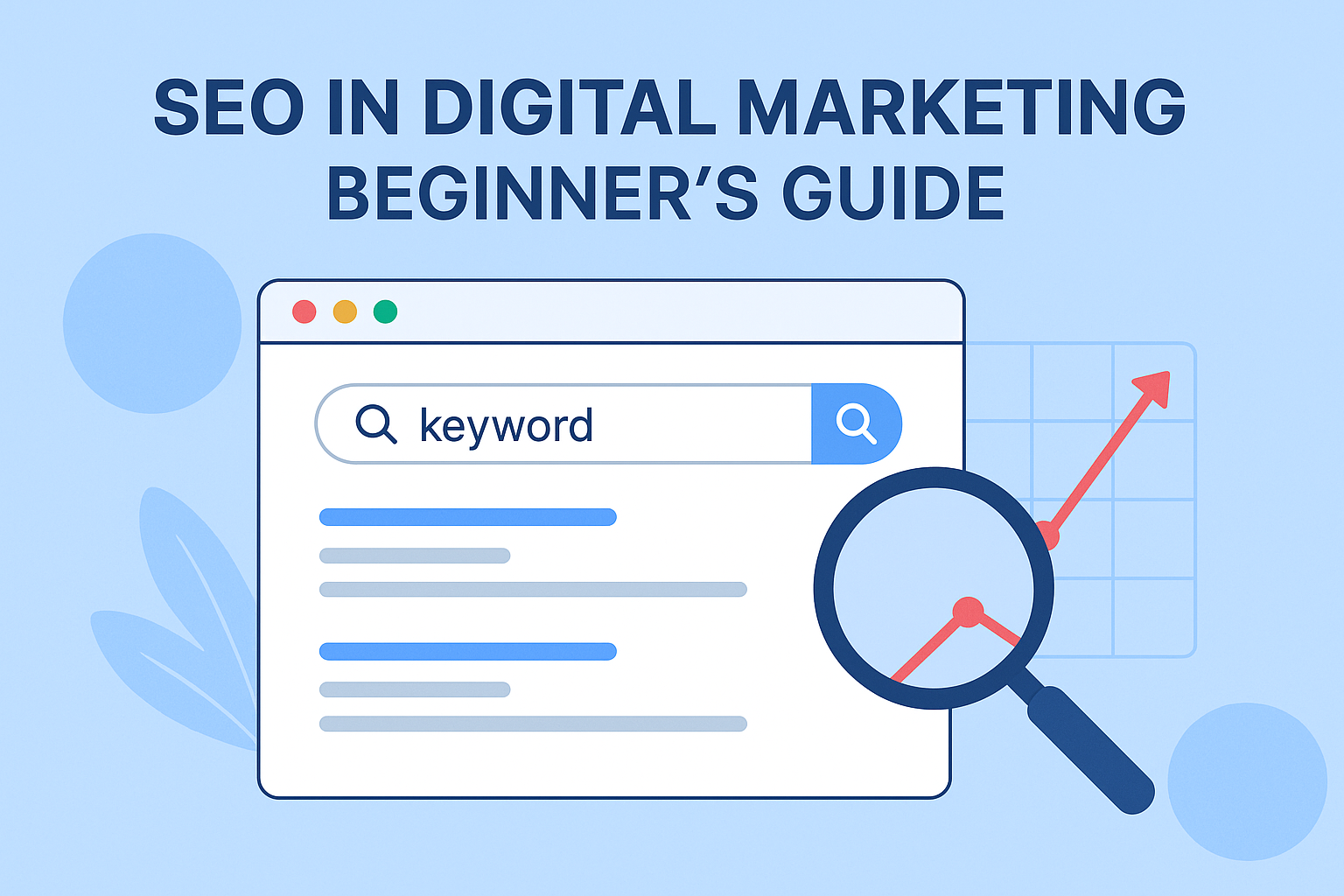
At its core, SEO is the practice of improving your website so that search engines like Google understand what it’s about and show it to people searching for related topics.
In simpler terms:
- Digital marketing covers every online tactic to promote your brand.
- SEO is one of those tactics, focusing on making your site more visible in search results without paying for ads.
2. Why SEO Matters More Than Ever
Search engines are where buying journeys often begin. According to recent studies:
- 68% of online experiences start with a search engine.
- The first five results get over 75% of the clicks.
If your business isn’t appearing where your audience is looking, you’re handing that traffic (and revenue) to your competitors.
SEO is more than a traffic booster it’s a trust builder. Websites ranking high organically are often perceived as more credible and authoritative.
3. How Search Engines Work
Before diving into tactics, it’s important to understand how Google and other search engines decide who ranks where.
The process happens in three main steps:
- Crawling – Search engine bots (often called spiders) scan the internet for new or updated pages.
- Indexing – Those pages are stored in a giant database.
- Ranking – When someone searches, Google uses hundreds of ranking factors to decide the order in which pages appear.
Your job with SEO is to make it easy for search engines to crawl, index, and trust your content.
4. The Main Types of SEO
SEO isn’t a one-size-fits-all activity. It’s made up of several categories that work together:
a) On-Page SEO
Everything you do on your own website to help search engines understand your content, such as:
- Optimizing titles and meta descriptions
- Using relevant keywords naturally
- Structuring content with headings
- Adding internal links to related pages
b) Off-Page SEO
Activities outside your website that improve your authority, mainly:
- Earning backlinks from reputable websites
- Social media signals
- Brand mentions across the web
c) Technical SEO
Behind-the-scenes improvements that affect how search engines crawl and index your site:
- Mobile responsiveness
- Page speed
- Secure connections (HTTPS)
- XML sitemaps and schema markup
d) Local SEO
If you serve a specific geographic area, local SEO helps your business appear in Google’s local pack and maps results.
5. The Role of Keywords in SEO
Keywords are the search terms people type into Google. Choosing the right ones is essential because they connect your content to your audience’s intent.
There are different keyword types:
- Short-tail (e.g., “shoes”) – broad, high competition
- Long-tail (e.g., “best running shoes for flat feet”) – more specific, easier to rank, and often higher converting
Pro tip: Avoid keyword stuffing. Search engines are smarter than ever and focus on context, synonyms, and overall content quality.
6. Backlinks: The Fuel Behind SEO Success
If keywords tell Google what your page is about, backlinks tell it how trustworthy you are.
A backlink is simply a link from another website to yours. The more relevant and high-quality sites linking to you, the more authority your site gains and the better you can rank.
High-quality backlinks are:
- From reputable, relevant websites
- Earned naturally through great content or outreach
- Surrounded by related text (anchor text)
Link building is one of the most challenging yet rewarding parts of SEO and something we specialize in at Link GrowthLab.
7. Content is Still King
Even with perfect technical SEO and hundreds of backlinks, your site won’t rank without valuable content.
Google’s algorithms are designed to prioritize content that:
- Solves problems for readers
- Is original and well-researched
- Is easy to read and navigate
- Uses a clear structure with headings and bullet points
The best-performing SEO content blends quality writing with search optimization.
8. Measuring SEO Success
You can’t improve what you don’t measure. Here are a few key metrics to track:
- Organic traffic – The number of visitors coming from search engines
- Keyword rankings – Where your pages rank for target keywords
- Click-through rate (CTR) – How often people click your result when it appears
- Bounce rate & time on site – Indicators of content relevance and quality
Tools like Google Analytics, Google Search Console, and Ahrefs make it easier to monitor performance.
9. Common SEO Mistakes to Avoid
- Chasing only high-volume keywords while ignoring competition levels
- Buying low-quality backlinks (can lead to penalties)
- Neglecting mobile optimization
- Publishing thin content that adds little value
- Ignoring technical errors like broken links or slow loading times
10. Where SEO Fits in Your Digital Marketing Strategy
SEO works best when paired with other digital marketing channels:
- Content marketing – Creates the assets that rank
- Social media – Distributes your content and drives engagement
- Email marketing – Nurtures visitors into customers
- Paid ads – Delivers instant traffic while SEO builds long-term visibility
When integrated properly, SEO becomes the foundation of your online presence, ensuring that every other marketing effort has a stronger impact.
Final Thoughts
SEO in digital marketing isn’t a quick hack it’s a long-term investment. But once it starts working, the benefits compound: more visibility, more traffic, and more trust from your audience.
If you want to skip the trial-and-error phase and build a strategy that works in 2025 and beyond, our team at Link GrowthLab can help. From keyword research to high-quality link building, we specialize in making your brand the one that gets found online.